Category: Science Infographics
-

Future State of the World in the Next 50 Years
Earth’s natural resources, such as water, air and fertile land that nurture plants and animals, are the things that keep all 7+ billion of us alive. However, the rapidly growing human population, which contribute to the rising consumption of these resources, is threatening our sustainability on this planet. See the future state of Earth in…
-
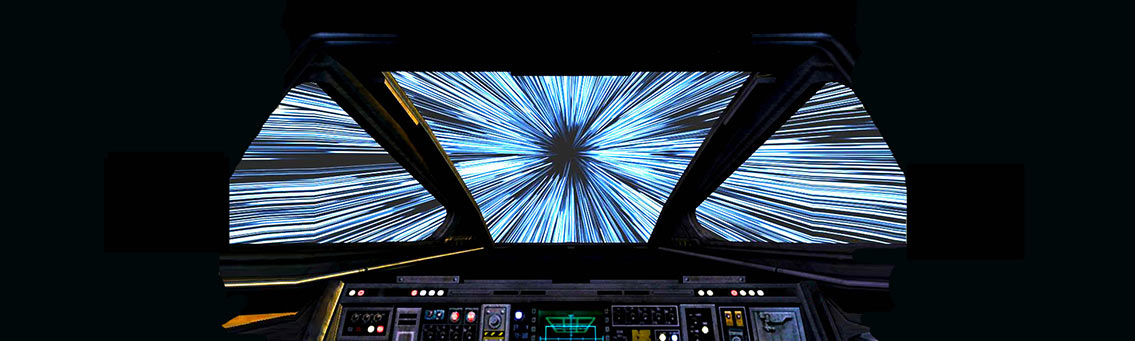
Travelling Space: Near the Speed of Light
Imagine travelling the vastness of the universe at the speed of light—the ultimate speed limit as revealed by Einstein’s theory of relativity. Space travel at light speed will require huge funding and a spacecraft designed to keep up with the instantaneous and constant acceleration. Let’s say we have the spaceflight system with the speed of…
-

What’s Happening Inside Your Brain on LSD Trip?
Sahara is a dark clean drupal blog theme made by 4coding.
-

Animal Hearing Ranges Compared to Human
Not only can some animals hear low frequency sounds three times that of human ears, they can as well hear sounds close to four times farther than human hearing range. Humans hear best somewhere between the audible frequency range of 20Hz to 20,000 Hz. We can listen to the rumble of a faraway thunder but…
-

-

The Potential of Alien Life within Jupiter’s Moon Europa
For more than 20 years, astrobiologists have been gazing upon Jupiter’s moon Europa as a potential hot zone for alien life. NASA’s Hubble space telescope first observed some water vapor above the icy south polar region of the Galilean moon in late 2012. Many scientists believes that the plumes erupting off from the salty ocean…
-

List of 500 Confirmed Exoplanets
The search for exoplanet is one of the most intriguing topic in astronomy these days. When astronomers discovered the first extrasolar planet “Pegasi 51 b” in 1995, for the first time in the history of mankind, we now know for certain the existence of alien planets orbiting other stars. This infographic by Slovak designer, Martin…
-

How Many People Can The Earth Hold?
It took us thousands of years to reached the first billion population in 1804, only 123 years to reach the second billion in 1927 and just 33 years to gain three billion in 1960. Then, the world population got to four billion in 1974, five in 1987, six in 1999 and the United States Census…
-
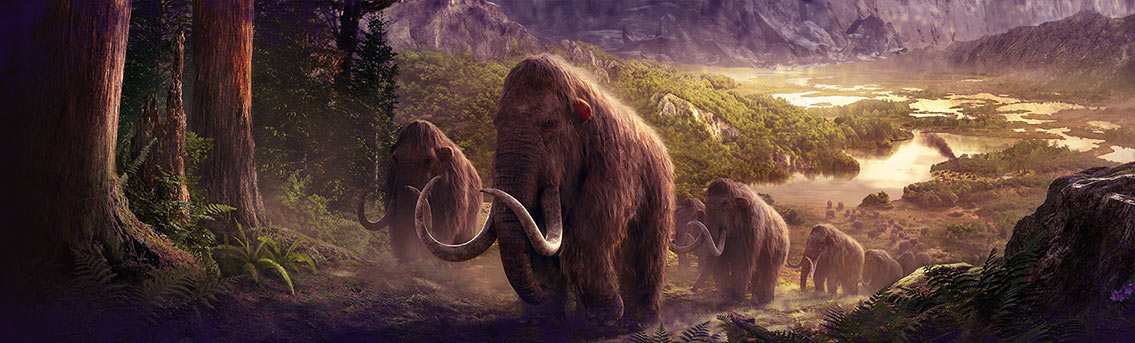
Resurrection Biology: Cloning Woolly Mammoth
Biologist and cloning researcher are getting closer to bringing back to life the extinct poster animal of the Ice Age, the woolly mammoth. In Russian lab, paleontologists are doing an autopsy on the 40,000 year old Pleistocene mammal to learn how it lived and died. While scientists in South Korea and Harvard University are both…
-

The Science of Weightlessness
You might think that astronauts experience weightlessness in space because they are far from the Earth’s gravity. According to Science, gravity in orbit is still around 90% as strong as on Earth’s surface. The reason why astronauts in the International Space Station feel weightless is because they are constantly falling together with the ISS. This…